

The Barachin
..here is the original, rich in history and tradition: you open it with one hand, and as for the safety.. just take hold of it!
A knife made entirely by hand, plain and distinctive in line. Made with the materials and the working methods of the knifemaking tradition of our valleys. The rustic finish brings out the handwork: it is solid and it works, meant both for people who love blades and for people who wear a knife out through use, the way tradition intends.
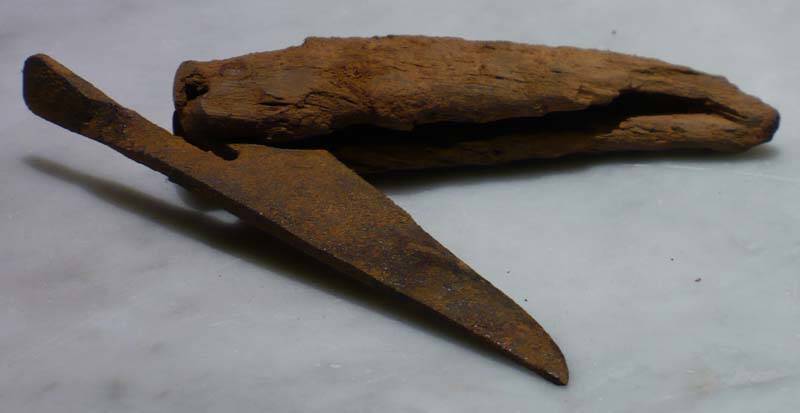
The Barachin came about from the shapes of an old blade found in a cellar in Baracco, a small hamlet in the Monregalese, in an area with a strong blacksmithing tradition (Frabosa, Roccaforte and Villanova Mondovì). After a spell of research we put our family traditions as blacksmiths and knife grinders to work, and out came a knife made entirely by hand, in full respect of that tradition.
The blade is hand-forged carbon steel, normally between 7 and 8 cm long, hardened in a salt bath and tempered, left rough on the surface and finely worked at the edge.
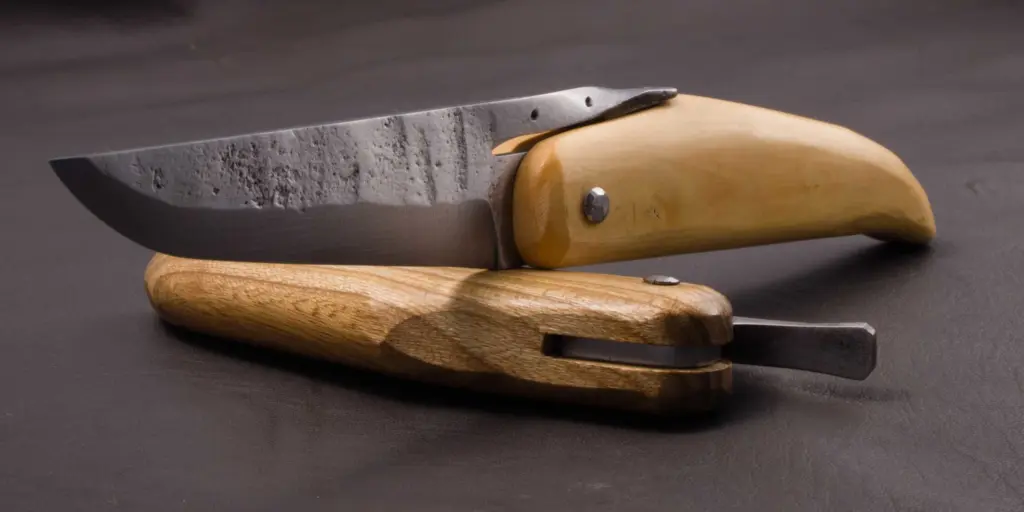
The Barachin is a pure friction folder: it has no locking mechanism, and the blade is held open by your own grip. The mechanism is an evolution of the one on the Vernante knife: you press on the lever, the part of the tang that projects past the pivot, and it is your finger on the lever that keeps the blade from closing. On the Barachin it stands apart for the twist in the lever, which lets it be all of a piece with the rest of the blade, with no joints and no welding: it is stronger, and the line is its own.
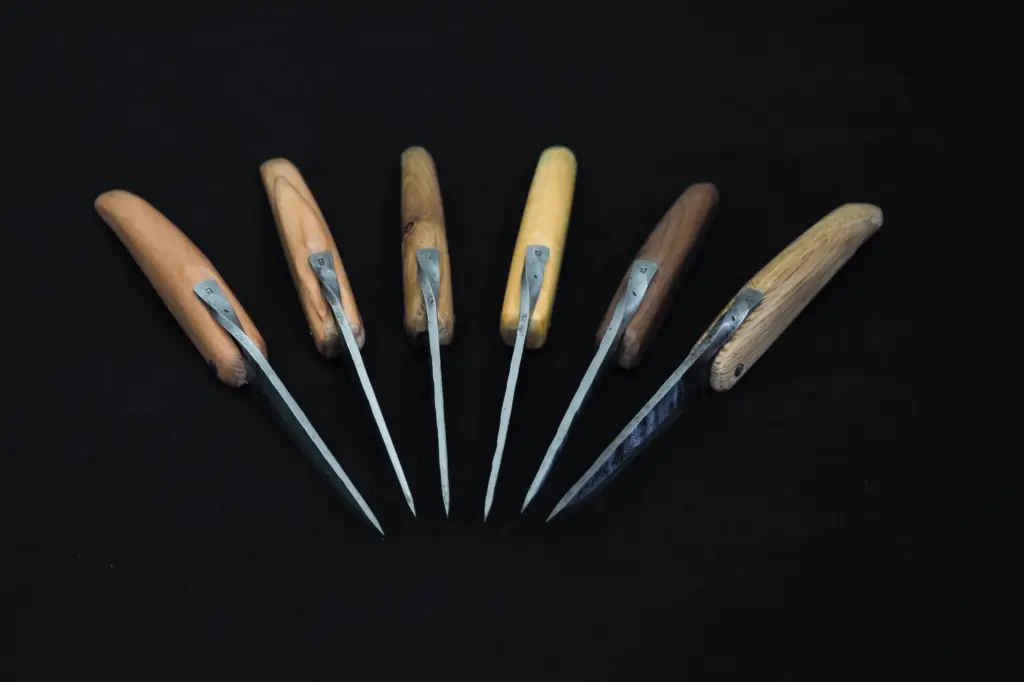
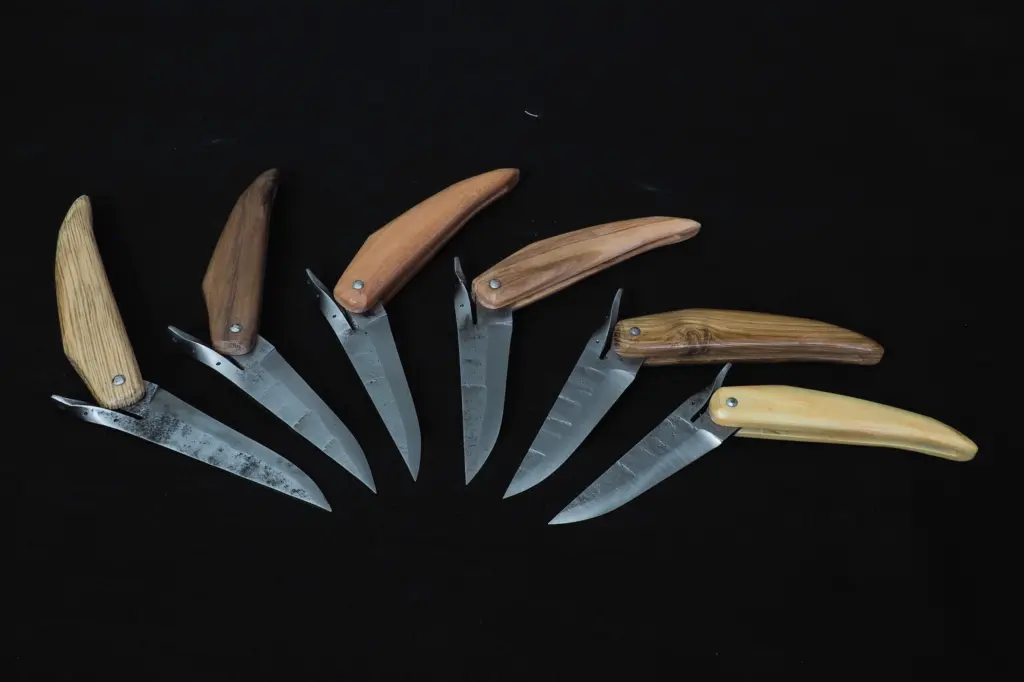
The handle is a single block of local wood, usually boxwood: a very hard wood, once used for knife handles and hammer heads, and today for inlay work. The other woods I generally use are oak, laburnum, walnut and olive.

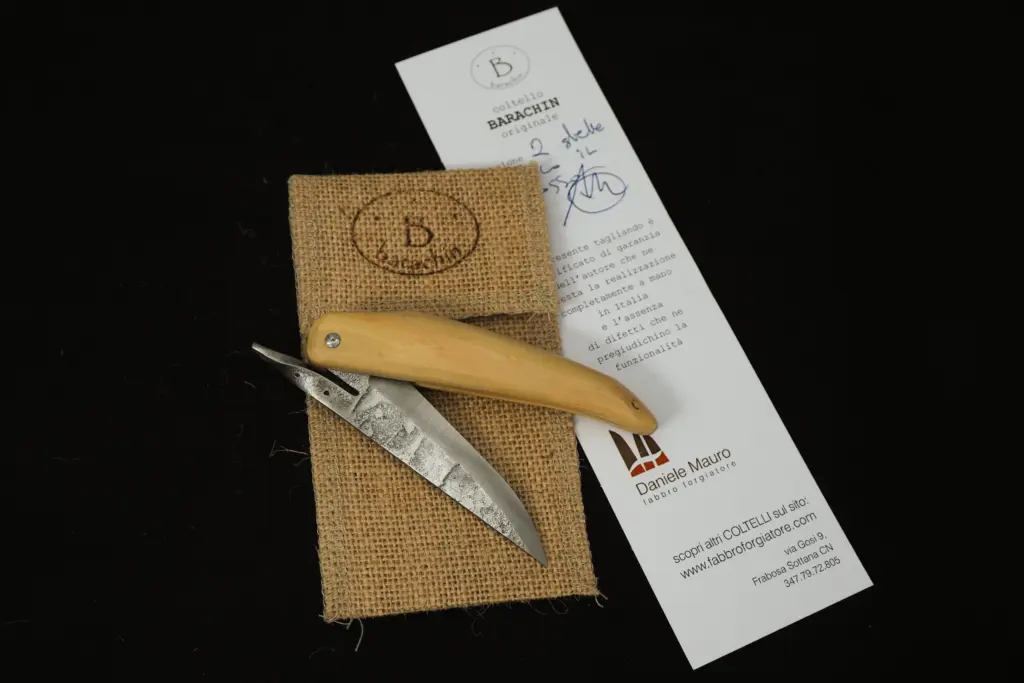
Every Barachin comes with its certificate of guarantee: a craftsman’s knife, made entirely by hand, in Italy, and free of any manufacturing defect that could affect its use or its working.
For more information, write to me at info@fabbroforgiatore.com.